
Commercial Interior Design in Cape Town

Office Space Planning in Cape Town: Your Most Asked Questions Answered

Planning an office project in Cape Town?

We source up to three independent quotes from pre-vetted commercial contractors


We are not a contractor. We are a quote coordination service backed by 15 years of commercial property experience in Cape Town. When your office needs to change, whether you are fitting out a new space, renovating an existing one, or handing back at lease end, finding the right contractor takes time you do not have.

We take your brief, share it with our network of pre-vetted commercial contractors, and bring you up to three independent quotes. You compare them, ask questions, and decide. We stay neutral throughout. Read more on how it works.

Category: Advice | Reading time: 8 min

Office Space Planning in Cape Town: Your Most Asked Questions Answered

Key Takeaways:

  • Space planning should happen before any renovation or fit out spend, not after
  • The cost of changing a layout on a drawing is zero, the cost of changing it during construction is significant
  • Hybrid working has changed the space per person calculation considerably
  • A good space plan does more than arrange desks, it defines how your business operates physically

Space planning is one of those services that most businesses know they need but are uncertain about when to commission it, what it actually involves, and whether the cost is justified. The questions we receive most consistently from Cape Town businesses fall into a handful of clear themes. This article works through all of them.


What Is Office Space Planning?

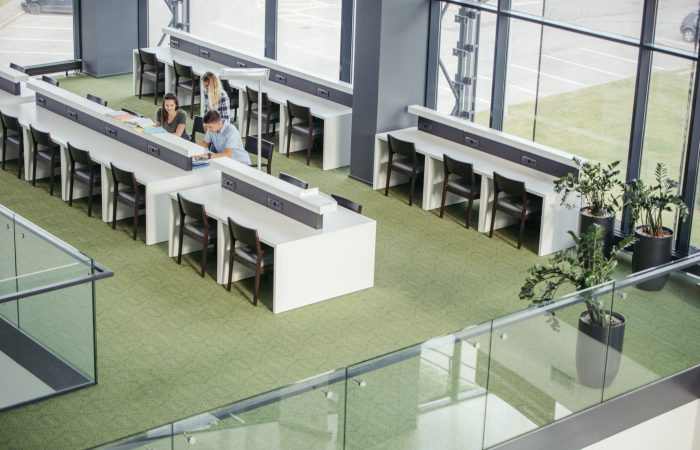
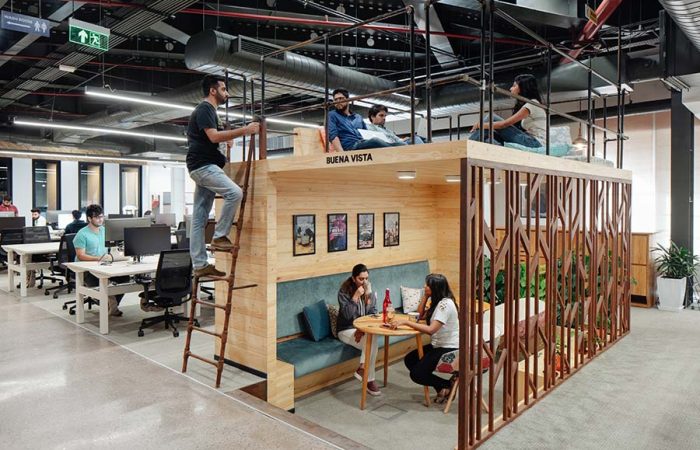
Space planning is the process of analysing a floor plate and designing a functional layout before any building work begins. It answers the question of how your space should be organised so that it supports the way your business operates. A space plan defines where workstations sit, where meeting rooms go, how circulation routes flow through the space, where storage is positioned, how natural light is distributed across different work settings, and how the space accommodates your headcount at both current and projected sizes.

It is not interior design, though the two are often confused. Interior design determines what the space looks like, the finishes, the colours, the furniture aesthetic, and the brand expression. Space planning determines how the space functions. The two disciplines work best when they are done in sequence, with the space plan establishing the functional foundation before the interior designer develops the aesthetic layer on top of it.

Why Does Space Planning Matter?

The layout of your office has a direct effect on how your team works. A well planned space reduces friction, shortens the distance between the people who collaborate most frequently, separates activities that need quiet from activities that generate noise, and ensures that every square meter of your leased floor space is earning its place. A poorly planned space does the opposite. Teams that need to work closely end up separated by the full length of the floor. Meeting rooms are sized for ten people when most meetings involve three or four. The kitchen is positioned on the only route between the entrance and the workstations, creating a permanent bottleneck. The open plan floor is so acoustically exposed that focused work is impossible. None of these problems are expensive to solve on a drawing. All of them are expensive to solve once the partitions are up and the services are distributed.


When Should I Commission a Space Plan?

Before anything else. This is the answer, and it is worth being direct about because the most common mistake businesses make is treating space planning as something that happens after the big decisions, rather than something that informs them. If you are moving into a new space, commission a space plan before you finalise the lease if possible. A space plan at that stage tells you whether the floor plate actually works for your headcount and your operational requirements, before you are contractually committed to it. Discovering that a space does not work for you after signing a five year lease is an expensive problem.

If you are renovating an existing space, commission a space plan before you brief any contractors. The space plan defines what needs to be built, which makes contractor quotes accurate and comparable. Without a plan, contractors are pricing a vague scope and the resulting quotes reflect that vagueness in the form of contingency allowances and post tender variations. If you are renewing a lease and your current layout is no longer working, commission a space plan as part of the renewal process. Many landlords will contribute to fit out costs as a lease renewal incentive, and having a space plan in hand gives you the basis to negotiate that contribution against a defined scope.


How Much Does Office Space Planning Cost in Cape Town?

Space planning fees in Cape Town are typically structured in one of three ways: a flat project fee based on the size of the space and the complexity of the brief, an hourly rate for smaller or less defined briefs, or as a component of a broader interior design or fit out fee. For a standalone space planning exercise on a typical commercial office in Cape Town, indicative ranges are as follows:

A preliminary test fit or concept layout for a space up to 300 square meters typically costs R8,000 to R18,000 depending on the number of layout options produced and the level of detail required. A fully documented space plan with detailed drawings, specifications, and contractor ready documentation for a space between 300 and 800 square metres typically costs R18,000 to R45,000. For larger or more complex spaces, fees are generally negotiated based on the specific scope. Where space planning is included as part of a broader interior design or fit out package, it is often absorbed into the overall professional fee rather than charged separately.

Getting three independent quotes from space planners who work specifically in commercial environments is the most reliable way to understand what your specific brief will cost. Fees vary significantly between practitioners, and the cheapest option is not always the best value when the output is going to determine how much your construction costs.


What Information Do I Need to Provide?

Less than most businesses think. You do not need architectural drawings, technical specifications, or a fully formed brief to start a space planning conversation. What a space planner needs to begin is:

The size of the space in square meters, or the address so they can arrange a site visit and measure themselves. Your headcount, both current and projected over the lease term. If you are expecting to grow from 40 to 60 people in three years, the layout needs to accommodate that trajectory, not just the current number.

How your team is structured. Which teams need to sit near each other, which teams generate noise that would disrupt others, which roles need privacy or confidential work settings, and which are most collaborative. Your fixed requirements. The non negotiables: a reception area of a certain size, a minimum number of meeting rooms, a board room, a server room, a particular number of private offices. These define the constraints the planner works within.

Your timeline and budget range. The timeline determines how quickly the space plan needs to be produced and how quickly the resulting fit out needs to be completed. The budget range informs the level of finish and the scope of what is realistically achievable. Everything else, the aesthetic direction, the furniture specification, the technology infrastructure, can be developed as the process unfolds.


How Long Does Space Planning Take?

A preliminary concept layout for a straightforward brief can be produced in one to two weeks from the point of site measurement and brief confirmation. This is enough to establish whether a floor plate works for your requirements and to begin estimating construction costs. A fully documented space plan, including detailed drawings, furniture layouts, services coordination notes, and specifications sufficient for contractors to price from, typically takes three to four weeks for a mid sized commercial office.

More complex briefs, including multi floor tenancies, spaces with significant structural constraints, or projects that involve detailed acoustic or technical requirements, take longer. Allow five to eight weeks for thorough documentation on a complex project. The time invested in space planning is almost always recovered in the construction phase. A well documented space plan reduces variation orders, eliminates guesswork in contractor pricing, and prevents the expensive mid construction changes that occur when layout decisions are deferred until the build has started.


What Is the Difference Between a Space Plan and a Test Fit?

A test fit is a preliminary exercise, typically a single layout option produced quickly to test whether a floor plate can accommodate a given headcount and program of requirements. It is the first answer to the question of whether a space works, produced before significant time or money is invested.

A full space plan is a developed, documented, and refined layout that has been worked through in detail with the client, tested against multiple options, and produced to a standard that contractors and interior designers can work from.

Most space planning projects begin with a test fit and progress to a full space plan once the floor plate and the broad layout direction have been confirmed. The test fit tells you whether to proceed. The full space plan tells you exactly what to build.


 Can Space Planning Help With Hybrid Working?

This is one of the most common briefs we see at present, and space planning is precisely the right tool for it.

Hybrid working changes the fundamental space requirement in ways that a traditional assigned desk layout does not accommodate well. If 35 percent of your team works from home on any given day, you do not need a desk for every person. You need enough workstations for your peak daily occupancy, a range of collaborative and focus settings that make the office worth coming to, and a layout that functions as well at 60 percent capacity as it does at full occupancy.

A space planner will assess your actual occupancy patterns, model the desk to person ratio that fits your working model, and design a layout that serves your hybrid policy rather than contradicting it. The output is a space that feels purposeful and well used rather than half empty.

The efficiency gain from a well planned hybrid layout is real. Many businesses find that a space plan for a hybrid environment allows them to either reduce their total floor space requirement at lease renewal or absorb headcount growth within their existing footprint, because the same square meterage works harder when it is planned around actual usage.


Do I Need a Space Planner and an Interior Designer, or Can One Person Do Both?

Some commercial designers offer both services and are competent in both. Others specialise in one or the other. For most projects, the disciplines are distinct enough that it is worth understanding what you are getting before assuming they are the same thing.

Space planning is a functional exercise. The output is a layout that works operationally, that meets your headcount requirements, that satisfies building code and fire escape requirements, and that provides a practical foundation for the construction work to follow.

Interior design is an aesthetic exercise. The output is a specification of materials, finishes, colours, lighting, furniture, and brand elements that make the space look and feel the way you want it to.

For smaller or straightforward projects, a designer who handles both can be entirely sufficient. For larger or more complex projects, having a dedicated space planner establish the functional layout before the interior designer develops the aesthetic brief tends to produce better outcomes, because the two sets of priorities do not compete with each other.

When you brief Cape Interiors, describe what you need and we will match you with the right people for your scope.


What Does a Space Plan Actually Deliver?

At the conclusion of a space planning exercise you should receive, at minimum, a floor plan drawing showing the proposed layout at scale, with workstations, meeting rooms, circulation routes, and fixed elements clearly indicated. A thorough space plan also includes furniture layouts showing specific desk configurations and furniture types, a schedule of accommodation listing every space by type and size, services coordination notes indicating where power, data, lighting, and HVAC need to be distributed, and a brief written rationale explaining the design decisions and how they respond to the brief. This documentation is what contractors price from, what interior designers work from, and what you take to your landlord for approval if structural changes are required. A space plan that exists only as a sketch or a conversation is not sufficient to drive an accurate construction cost or a meaningful approval process.


How Do I Get Started?

The starting point is a conversation about your space, your team, and your requirements. You do not need a fully formed brief, a floor plan, or a clear idea of what you want the outcome to look like. A space planning exercise is designed to help you develop all of those things. Through Cape Interiors, we source up to three independent quotes from commercial space planners in our network who work specifically in Cape Town. You receive independent proposals, compare them on the basis of approach, fee, and relevant experience, and choose the planner that fits your brief and your confidence level. No cost to you until you appoint someone.

Transform Your Office with Confidence

Whether you’re renovating your current space or fitting out a new office, our contractors manage the process from start to finish—on time and within budget.

> Professional project management
> Trusted contractors and designers
> Multiple competitive quotes

Tell Us About Your Project

Related Articles

  • All Posts
  • Advice
  • News

We leverage our vast network of skilled contractors and office interior designers to offer you multiple competitive and independent quotes for your projects.

© 2026 Cape Interiors I Web Services by: WebSpace Design