How to Find Your Next Office
Finding a new office should start long before you begin viewing properties. Many businesses begin their search by scrolling through online listings, requesting brochures and arranging viewings. This often creates a long list of properties without a clear way to compare them. A better process starts with your business requirements, budget and timing.
Whether your lease is expiring, your team is growing or your current premises no longer meet your needs, careful planning can help you avoid rushed decisions, unnecessary costs and unsuitable lease commitments. Most businesses approach finding a new office the wrong way. They start with listings, look at photos, compare rentals, and then try to make a decision. That process creates risk because you end up choosing space before you understand what your business actually needs. The right approach is to start with your business, not the building.
Step 1: Define How Your Team Works
Before you look at space, understand how your team operates.
- How many people are in the office daily?
- How many work remotely?
- What type of work do they do?
- Quiet, focused work requires a different layout to collaborative teams. If you get this wrong, no building will fix it.
Step 2: Get Your Timing Right
Lease expiry often drives decisions, but it should not control them. You need enough time to:
- Test the market
- Negotiate properly
- Plan your fit‑out
- If you leave it too late, you lose leverage.
Step 3: Choose the Right Location
In a market like Cape Town City Centre, access matters. Your office must work for your staff and your clients. Look at commute patterns, parking, and public transport. If your team struggles to get to work, productivity drops.
Step 4: Review Buildings with Vision
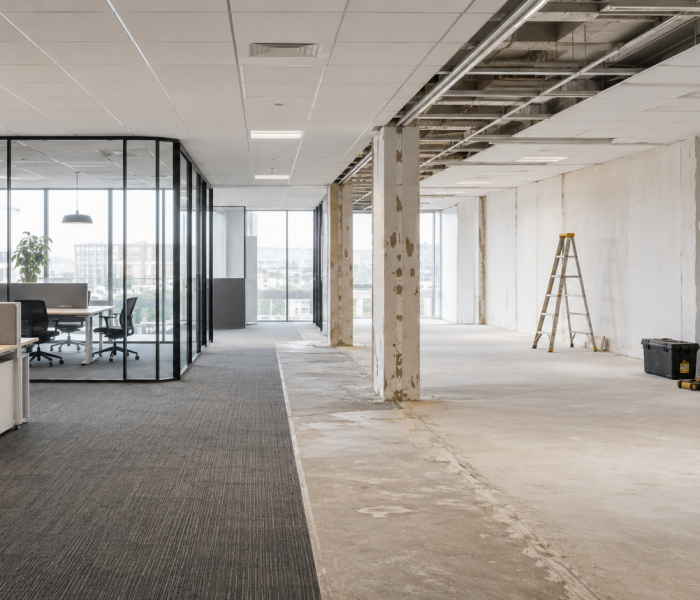
When you view space, don’t focus on how it looks today. Focus on what it can become. Most offices require changes – layout, meeting rooms, collaboration areas, and branding all need to align with your business. This is where planning and fit‑out strategy become critical.
Step 5: Understand the Full Cost
Rental is only one part of the equation. Factor in:
- Operating costs
- Parking
- Utilities
- Fit‑out
Then look at landlord incentives. Many landlords will contribute to your fit‑out or offer beneficial lease terms, but only if you negotiate correctly. Too many tenants lose value by accepting terms instead of structuring deals.
- Step 6: Compare Your Options
Stay versus go is not a guess – it is a structured analysis. - What does it cost to remain in your current space?
- What does it cost to move?
- What do you gain in each scenario?
- Once you have that clarity, the decision becomes straightforward.
Treat Your Office as a Business Decision
Your office affects cost, staff performance, and how the market sees you. Treat it with the same level of detail you would apply to any other major decision. If you are approaching a lease expiry or considering a move, start early and get proper advice. It will change the outcome. If you want a clear view of your options, reach out. I can help you assess your current position and plan your next move properly.
Decide Whether You Need to Move
Before searching for office space to rent in Cape Town, first decide whether relocation is the right option. Your current landlord may be willing to offer a lease renewal, reduced escalation, rent-free period, fit-out allowance or other incentives. Compare the cost of staying against the full cost of moving. See our stay-versus-go review. Moving may give you a better location, improved facilities or a more suitable layout. Staying may cost less and cause less disruption. The correct decision depends on the needs of your business rather than the appeal of a new office.
Required office size
Calculate how much space your business needs now and how much it may need during the lease period. Avoid basing your requirement only on your current floor area. Your existing office may be inefficient or contain space you no longer need. A space planner or fit-out specialist can test whether your proposed requirements will fit into a specific floor plate.
Preferred lease period
Commercial office leases commonly run for three to five years, although shorter and longer terms may be available. A longer lease may support stronger landlord incentives, but it also creates a longer financial commitment. Choose a lease period that reflects your growth plans, funding position and level of certainty.
Choose the Right Cape Town Office Location
Cape Town offers several office nodes, each with different rental levels, transport links, building types and amenities. The right location should work for your employees, clients and business. The Cape Town CBD offers a wide range of office buildings, from older converted properties to premium towers. operations.
Century City
Century City is a major decentralised office node with modern office parks, public transport links and access to the N1.
It may suit businesses seeking:
- Modern office buildings
- Secure business parks
- Proximity to Canal Walk
- Access from the northern and southern suburbs
- Backup power in selected buildings
- Structured parking options
The location is popular with corporate, technology, financial and professional service companies.
Claremont and Newlands
The southern suburbs provide access to established residential areas, public transport and retail facilities. These areas may suit businesses whose employees or clients are based in the southern suburbs. Office availability can be more limited than in the CBD or Century City, so early planning is important.
Woodstock and Observatory
Woodstock and Observatory offer a mix of creative offices, converted industrial buildings and modern business parks.
These areas may appeal to:
- Creative agencies
- Technology companies
- Design firms
- Education providers
- Growing businesses seeking flexible layouts
Check parking ratios, public transport access and surrounding property uses before committing.
Bellville and Tyger Valley
The northern suburbs offer several established office nodes with access to the N1 and nearby residential areas. These locations may suit businesses with staff, customers or operations across the northern suburbs.
Plan the Fit-Out Before Signing
Your fit-out should not begin as an afterthought. Before committing to an office, obtain an initial test fit and cost estimate. This will help you establish whether:
- Your team fits into the space
- The proposed layout complies with regulations
- The electrical supply is sufficient
- The air conditioning can support your layout
- Meeting rooms have proper acoustic treatment
- The project fits within your budget
- The office can be completed before occupation
A landlord contribution may cover part of the work, but it may not cover your full fit-out cost. Confirm how and when the landlord will pay the allowance.
Frequently Asked Questions
How long does it take to find a new office in Cape Town?
Businesses should usually begin planning between nine and twelve months before their current lease expires. The time required will depend on the office size, fit-out work, lease negotiations and availability in the preferred area.
How much office space does my business need?
The required size depends on your headcount, working model, meeting room requirements, private offices, support areas and expected growth. A test fit can confirm whether a specific office will meet your needs.
What costs should I include in my office budget?
Include basic rental, operating costs, rates, parking, utilities, VAT, deposits, fit-out costs, furniture, IT, moving expenses and reinstatement costs.
Which Cape Town area is best for office space?
The best area depends on where your staff and clients are based, your budget, transport requirements and building preferences. Popular office nodes include the Cape Town CBD, Century City, Claremont, Woodstock, Observatory, Bellville and Tyger Valley.
Should I use a commercial property broker?
A commercial property broker can help define your requirement, identify suitable properties, arrange viewings, compare costs and negotiate lease terms. Choose a broker with direct experience in the Cape Town office market.
What is a tenant installation allowance?
A tenant installation allowance is a landlord contribution toward the cost of fitting out the office. The amount and payment terms usually depend on the lease period, rental and condition of the premises.
What is beneficial occupation?
Beneficial occupation is a period before the formal lease commencement date during which the tenant may access the premises, usually to complete fit-out work. The tenant may still need to pay utilities, operating costs or other charges during this period.