When you start searching for commercial office space in Cape Town, you will quickly encounter the terms grey box and white box. Landlords, agents, and developers use them constantly, often interchangeably, which is part of the problem. They are not the same thing, and confusing them can lead to a significant misjudgment of what your fit-out is going to cost. Here is a clear breakdown of what each term means, how they differ, and what the distinction means for your project.
What Is a Grey Box Office Space?
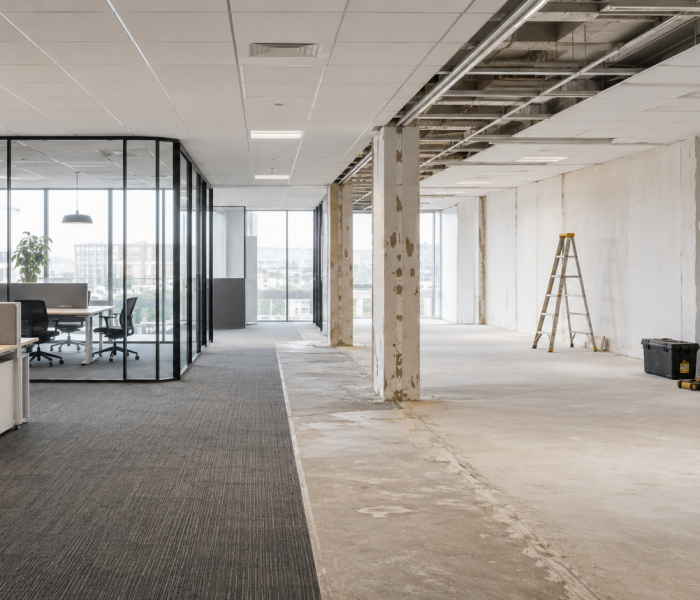
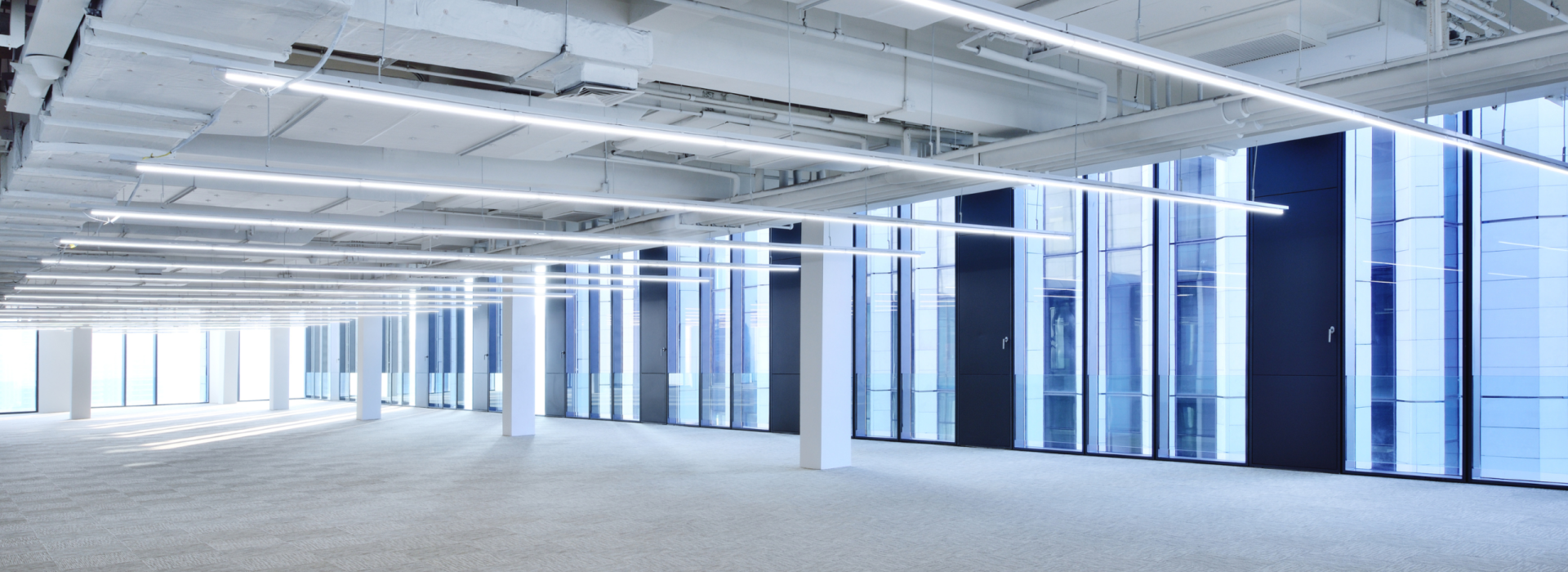
A grey box space, sometimes called a shell and core, is a building that has been structurally completed but fitted out to the bare minimum. The developer or landlord has delivered the building envelope: the structure, the external facade, the lifts and staircases, and the base building services to the floor plates. Beyond that, the floors are largely unfinished.
In practical terms, a grey box typically includes:
- Structural slab flooring — bare concrete, unfinished
- Exposed ceilings — no suspended ceiling grid, services visible overhead
- Base building electrical supply brought to the floor, but not distributed
- Base building HVAC brought to the floor, not distributed or ducted
- No internal partitions
- Toilets and fire protection typically completed in the core, not the tenanted areas
- No lighting, no data, no finishes of any kind in the tenanted space
A grey box is a blank structural shell. It is the most basic possible starting point for a tenancy, and it requires a full Category B fit-out, and often part of the Category A work, before any business can occupy it. Grey box spaces are most common in new commercial developments where the developer has delivered the building but left the interior entirely to tenants, or where a previous tenant has stripped the space completely during reinstatement.
What Is a White Box Office Space?
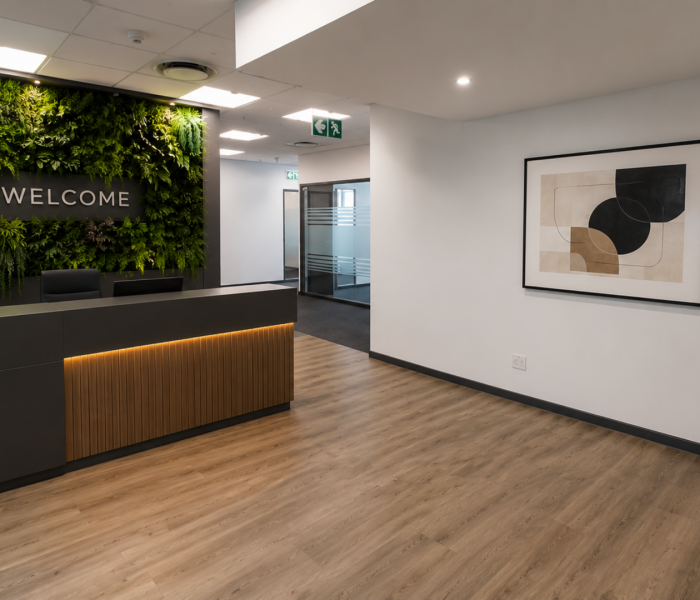
A white box space has been taken a significant step further. The landlord or developer has completed what is broadly called the Category A fit-out, the base-level interior finish that makes the space occupiable in principle, even if not yet configured for a specific tenant.
A white box typically includes:
- Suspended ceiling grid with ceiling tiles installed
- Recessed or surface-mounted lighting throughout
- Electrical distribution — power points, data conduits, DB boards on the floor
- HVAC ducted and distributed across the floor plate
- Raised access flooring or screed, ready to receive a floor finish
- Painted or plastered walls — typically white or neutral
- Toilets, kitchenette provisions, and fire protection completed
- Sometimes a basic reception area and lift lobby finishes
The critical point is that a white box is not a fitted space. It is a finished shell. It still requires a full Category B fit-out, partitions, meeting rooms, kitchen, flooring finish, branding, furniture, AV before it functions as a working office. But the base building work is done, which reduces both the scope and the cost of what the tenant needs to commission.
The Practical Difference in Cost and Timeline
This is where the distinction matters most to your budget. Taking a grey box space means you are responsible for both Category A and Category B work. In a white box, the landlord has absorbed the Category A cost. That is a meaningful difference on a per-square-metre basis. As a rough guide for Cape Town commercial fit-outs in current market conditions:
Category A work (grey to white box) typically costs R3,000 to R5,500 per square metre depending on the specification level, ceiling height, and complexity of the services distribution.
Category B work (white box to fitted office) typically costs R5,500 to R12,000 per square metre for a mid-range commercial fit-out, and higher for premium finishes.
Taking a grey box space rather than a white box space therefore adds R3,000 to R5,500 per square metre to your fit-out cost before you have installed a single partition. On a 500m² floor, that is R1.5 million to R2.75 million in additional spend. Some landlords offset this by offering a larger tenant installation allowance (TIA) on grey box leases, or by agreeing to complete Category A work as part of the lease negotiation. This is worth pressing for, do not assume the grey box asking rental is the final position.
A Third Term You Will Encounter: Shell and Core
Shell and core is sometimes used interchangeably with grey box, but in stricter usage it refers to an even more basic delivery, the structural frame and envelope only, with no services brought to the floor plates at all. Not every building agent uses these terms consistently, so when you are evaluating a space, ask specifically what is and is not included rather than relying on the label.
What This Means for Your Space Plan
Whether you are taking a grey box or white box space, a space plan should be your first step before committing any fit-out spend. The space plan defines the layout — where walls go, how services need to be routed, where the meeting rooms, workstations, reception, and kitchen sit. In a grey box space, the space plan directly informs where Category A services need to be distributed, which means the Category A and Category B work can be designed and priced together rather than in sequence.
Getting this wrong, commissioning Category A work without a confirmed Category B layout, is one of the most common causes of expensive variations during commercial fit-outs. Services get distributed to positions that do not align with where walls and rooms end up, and the remedial work costs more than doing it right the first time.
What Happens at Lease End?
Both grey box and white box leases typically contain a reinstatement clause. Understanding which type of space you took occupation of matters significantly at lease end, because it defines what you are required to return.
Read more about our Office Reinstatement Services
If you took a grey box space and completed Category A yourself, your lease may require you to return the space to grey box condition, stripping out the Category A work you installed at your own cost. This is worth checking carefully before you sign. If you took a white box space, your reinstatement obligation typically covers the Category B work only, removing your fit-out and returning the space to white box condition, which is how you found it.
Either way, the schedule of condition attached to your lease at commencement is the definitive reference. If one was not prepared, your reinstatement obligation defaults to the lease wording, which is open to interpretation and often contested.
Summary: Grey Box vs White Box at a Glance
| Grey Box | White Box | |
|---|---|---|
| Ceiling | Exposed structure | Suspended ceiling installed |
| Lighting | None | Installed throughout |
| Electrical | Supply to floor only | Distributed across floor |
| HVAC | Supply to floor only | Ducted and distributed |
| Flooring | Bare concrete | Screed or access floor, ready for finish |
| Walls | Structural only | Plastered and painted |
| Fit-out required | Category A + Category B | Category B only |
| Typical additional cost vs white box | R3,000–R5,500/m² | — |
| Reinstatement obligation | Return to grey box or white box (check lease) | Return to white box |
Before You Sign Anything
If you are evaluating commercial spaces in Cape Town and the agent or landlord is describing a space as grey box or white box, ask for a detailed list of what is and is not included in the base building delivery. Get this in writing, not verbally. The difference between a space with HVAC distributed and one with only the supply brought to the floor is R800 to R1,500 per square metre in fit-out cost — a number that changes your budget and your timeline materially. Once you know exactly what you are taking, commission a space plan before anything else, and get three independent fit-out quotes so you understand what the market is pricing your specific scope at.
Read our article on “How much does a fit-out cost”