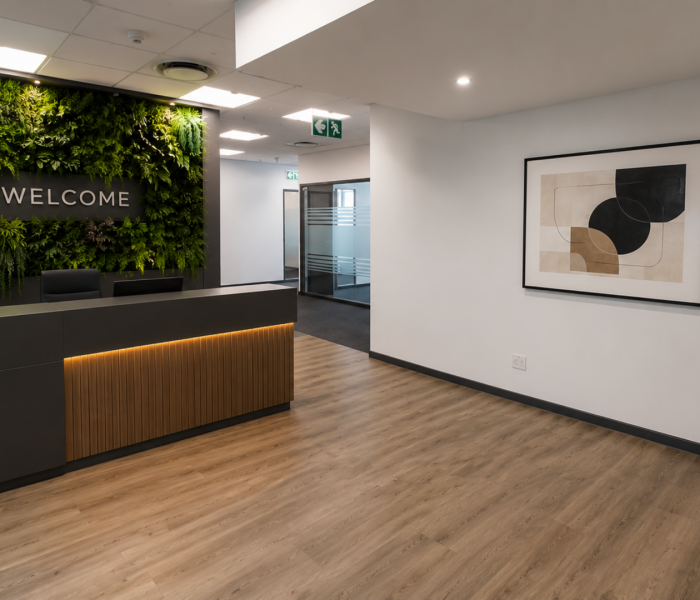
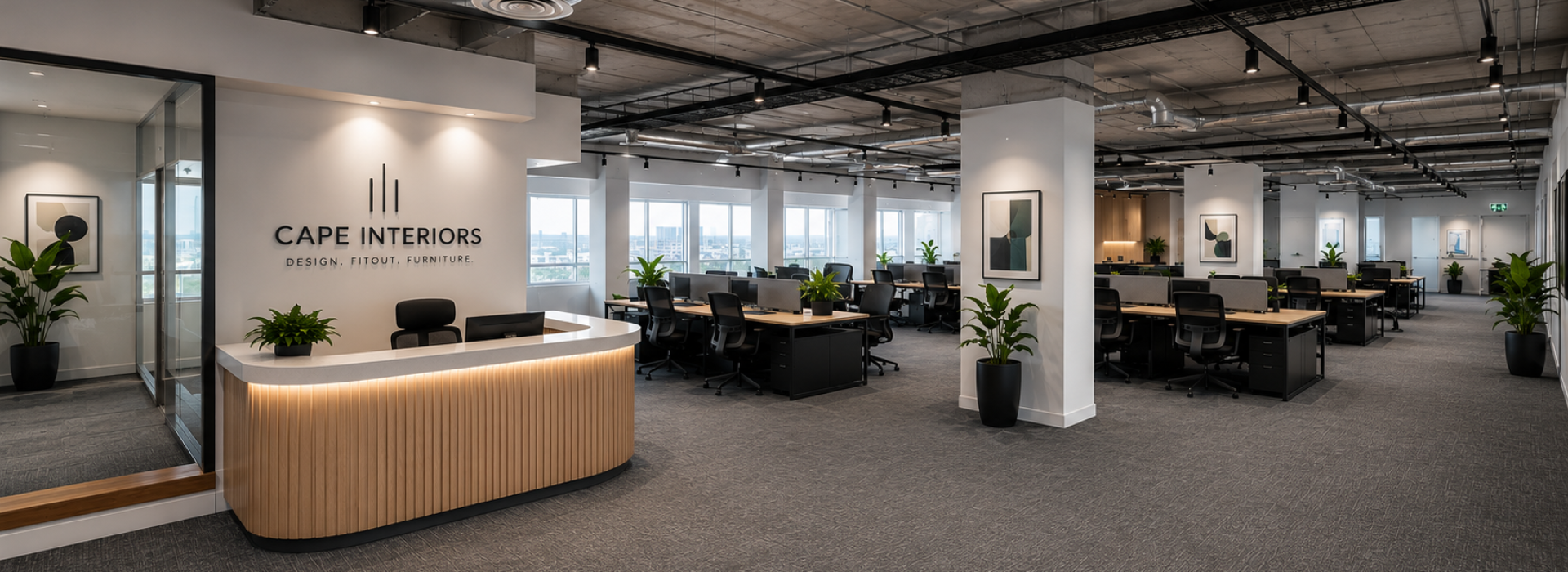
How to Visualise the True Potential of a White Box Office
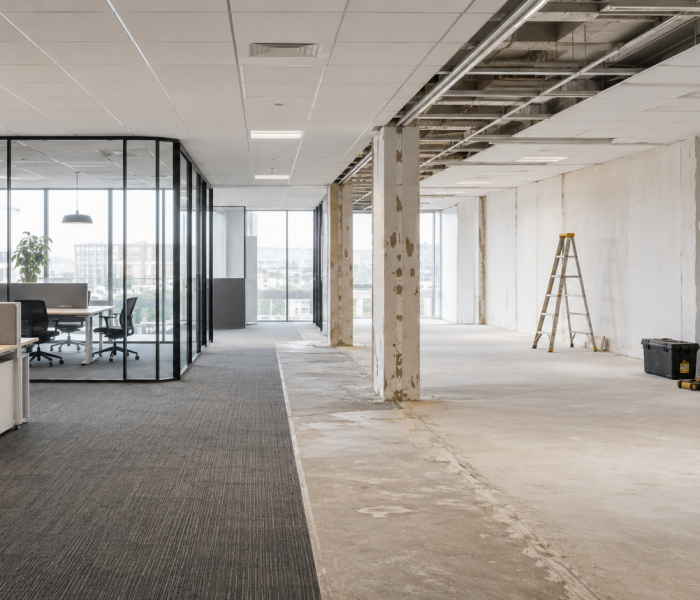
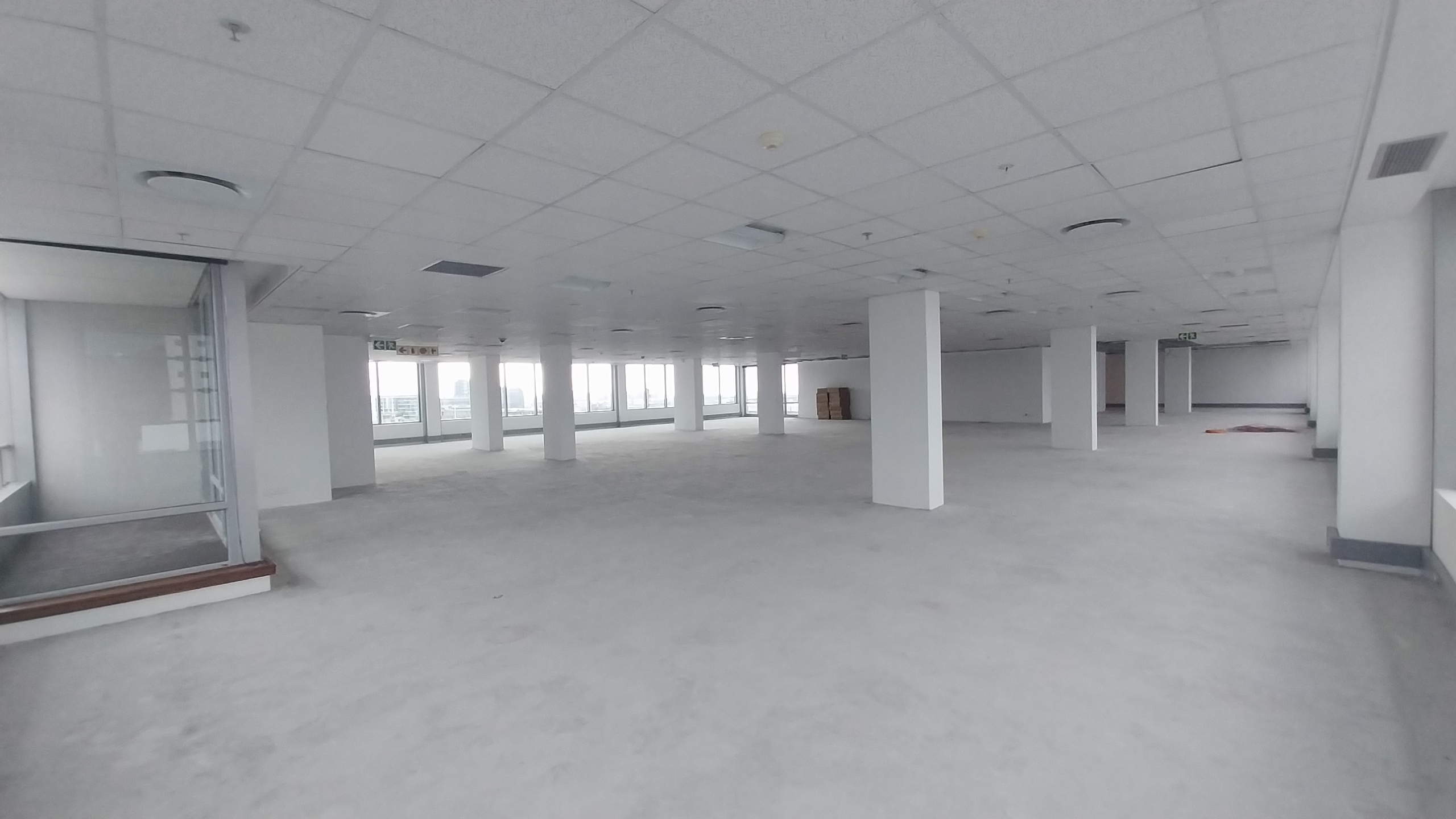
You are standing in an empty floor plate. White walls. Grid ceiling. Bare screed floor. Fluorescent light tubes running in rows above you. The space looks clinical, cold, and completely disconnected from any version of an office your team would want to work in.
This is the challenge every prospective tenant faces when viewing a white box space. What you see has almost nothing to do with what the space will become. The businesses that make good decisions at this stage are the ones who know how to look past the shell and assess what is actually there.
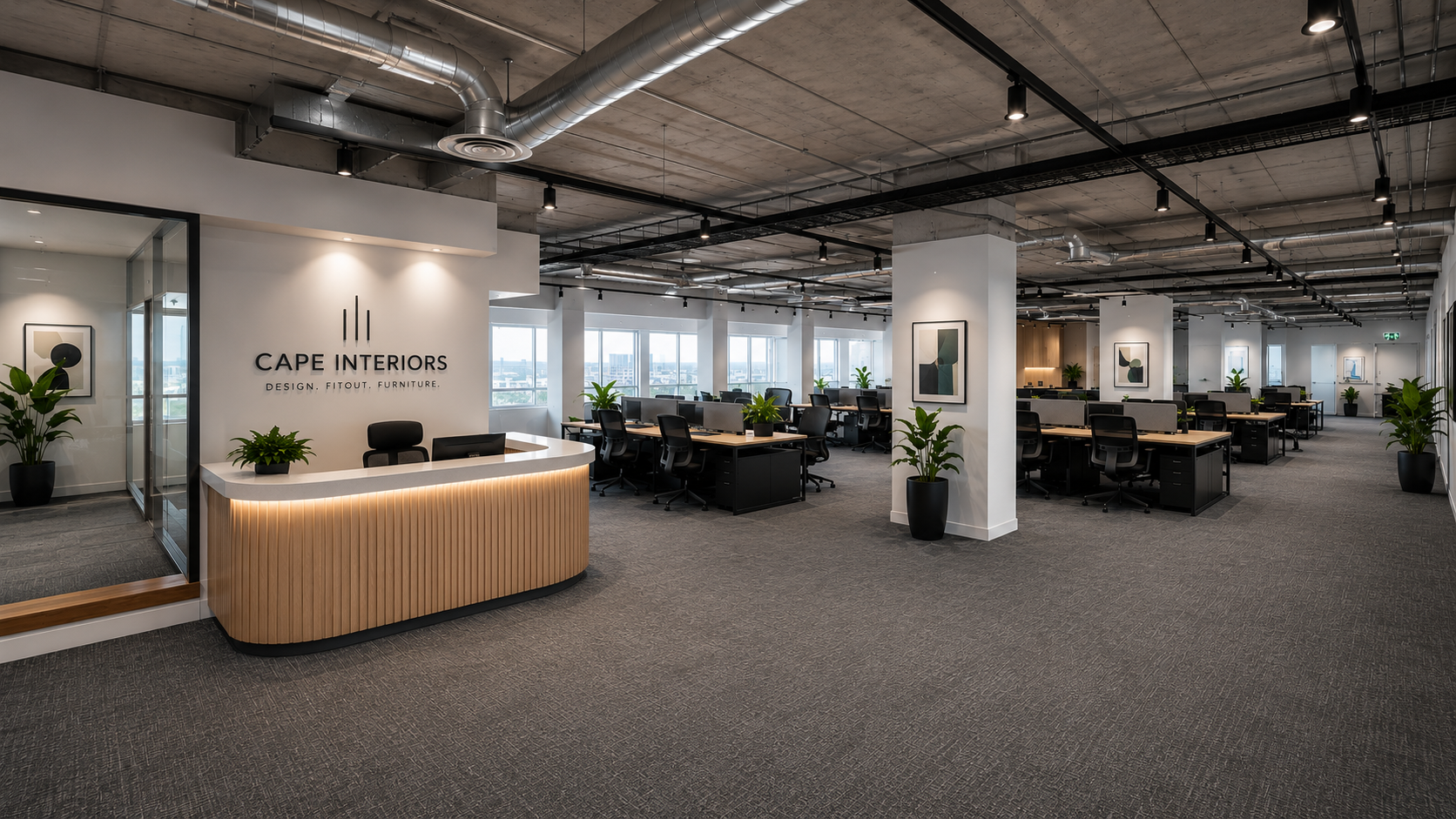
Start With the Bones, Not the Finish
The finish in a white box is irrelevant, you are replacing it. What matters are the structural characteristics of the space that you cannot change without significant cost, if at all.
Ceiling height is the first thing to assess. Measure it. A standard commercial ceiling in Cape Town runs between 2.6 and 3 metres after the suspended ceiling is installed. Anything above 3 metres gives you genuine design options, exposed ceilings, feature lighting, architectural volume. Anything below 2.5 metres will feel compressed once your fit-out is in, and no amount of design fixes a low ceiling.
Column positions and spacing determine your layout more than almost anything else. Columns that fall awkwardly in the middle of where you need an open work area create real problems. Walk the space and stand where you imagine your teams sitting. Check whether the columns interrupt sightlines, block natural light penetration, or force awkward partition positions.
The core position — where the lifts, stairwells, bathrooms, and service risers sit, defines the shape of the usable floor plate. A central core typically gives you a ring of usable space around it. An off-centre core can leave awkward residual areas that are hard to programme effectively. Identify where the core is and think about how your main circulation routes will flow from it.
The floor plate shape matters for efficiency. A regular rectangular plate is easiest to plan. An L-shape, a triangle, or a floor with multiple notches and angles wastes more space and complicates partition layouts. Irregular plates are not necessarily bad, but they require a more considered plan and often cost more to fit out because every partition run is a non-standard length.
Understand the Natural Light Before Anything Else
The finish in a white box is irrelevant, you are replacing it. What matters are the structural characteristics of the space that you cannot change without significant cost, if at all.
Ceiling height is the first thing to assess. Measure it. A standard commercial ceiling in Cape Town runs between 2.6 and 3 metres after the suspended ceiling is installed. Anything above 3 metres gives you genuine design options, exposed ceilings, feature lighting, architectural volume. Anything below 2.5 metres will feel compressed once your fit-out is in, and no amount of design fixes a low ceiling.
Column positions and spacing determine your layout more than almost anything else. Columns that fall awkwardly in the middle of where you need an open work area create real problems. Walk the space and stand where you imagine your teams sitting. Check whether the columns interrupt sightlines, block natural light penetration, or force awkward partition positions.
The core position — where the lifts, stairwells, bathrooms, and service risers sit, defines the shape of the usable floor plate. A central core typically gives you a ring of usable space around it. An off-centre core can leave awkward residual areas that are hard to programme effectively. Identify where the core is and think about how your main circulation routes will flow from it.
The floor plate shape matters for efficiency. A regular rectangular plate is easiest to plan. An L-shape, a triangle, or a floor with multiple notches and angles wastes more space and complicates partition layouts. Irregular plates are not necessarily bad, but they require a more considered plan and often cost more to fit out because every partition run is a non-standard length. Read more about White Boxed Offices.
Use the Floor Plan Before You Use Your Imagination
Request the floor plan from the landlord or commercial property advisor before your viewing and bring it with you. A floor plan at 1:100 scale gives you a document you can mark up on-site. Sketch where you think your teams will sit, where meeting rooms need to go, and where reception should land.
This is a rough exercise, not a design process. The goal is to test whether the space can physically accommodate what you need. Count the desks you require. Draw rectangles to represent meeting rooms of the sizes you need — a 4-person room needs approximately 12 square metres, an 8-person boardroom needs approximately 25 to 30 square metres. Check whether those rooms fit without consuming all the natural light or creating a floor plate that is entirely cellular with no open area left.
If the numbers do not work on a rough sketch, they will not work in a finished design either. A space plan from a professional will give you precision later. The floor plan sketch gives you a quick gut-check at the viewing stage.
Tape Out the Rooms on the Floor
This technique is underused and highly effective. Before your second viewing of a space you are seriously considering, bring masking tape. Mark out the rooms you need directly on the floor, your reception desk, your meeting rooms, your kitchen, your main work area. Use rough dimensions.
Standing inside a taped-out meeting room in the actual space is completely different from imagining it on a drawing. You feel immediately whether the room is the right size, whether it will feel cramped, whether the door position makes sense relative to the rest of the floor, and whether the view from inside the room is a solid wall or a connection to the rest of the office.
This exercise takes 20 minutes and changes how clearly you can assess the space. Most tenants skip it because it feels informal. That is exactly why most tenants are surprised when the finished fit-out does not feel the way they expected.
This is a rough exercise, not a design process. The goal is to test whether the space can physically accommodate what you need. Count the desks you require. Draw rectangles to represent meeting rooms of the sizes you need — a 4-person room needs approximately 12 square metres, an 8-person boardroom needs approximately 25 to 30 square metres. Check whether those rooms fit without consuming all the natural light or creating a floor plate that is entirely cellular with no open area left.
If the numbers do not work on a rough sketch, they will not work in a finished design either. A space plan from a professional will give you precision later. The floor plan sketch gives you a quick gut-check at the viewing stage.
Commission a Space Plan Early
A professional space plan is the most reliable way to understand what a white box space can become. A space planner works from accurate floor plan drawings and your brief, how many people, what room types, how your teams interact, what your growth plans are, and produces a layout that tests whether the space genuinely accommodates your requirements.
A good space plan will show you things a viewing never will. It will reveal whether the column grid makes a clean open plan impossible. It will show you that the floor plate is 40 square metres larger than you need, or 20 square metres too small once you account for all the fixed room requirements. It will identify that the only practical position for your reception desk is directly in front of the only north-facing window.
Space planning does not have to wait until after you sign a lease. Some landlords in Cape Town will allow prospective tenants to commission a test-fit on a space they are seriously considering, particularly for larger floor plates. A test-fit is a basic space plan done specifically to confirm whether a floor plate can accommodate your brief. It costs money but it is significantly cheaper than signing a 3-year lease on a space that does not work.
Look at the Building's Common Areas for Quality Signals
The lifts, lobby, corridor finishes, and bathroom standards in a building tell you how the landlord operates and what quality they will accept from tenant fit-outs. A landlord who has invested in a well-finished lobby is more likely to enforce reasonable building standards and less likely to let a tenant do poor-quality work that degrades the building.
It also tells you what your clients will experience before they reach your reception desk. A dated, poorly maintained lobby undermines a premium interior fit-out. A well-presented building entry reinforces it. You cannot control the common areas once you have signed. Look at them carefully before you do.
White box spaces are often acoustically harsh, hard floors, bare ceilings, no soft furnishings to absorb sound. This is not how the space will behave once fitted out, but it does reveal the acoustic characteristics of the building itself. Spend a few minutes in the space being quiet. Listen to what you hear from outside, traffic, neighbouring tenants, the building’s HVAC system. These sounds are present in a white box without any of the acoustic treatment your fit-out will introduce. If the external noise is significant in the empty shell, your fit-out will need to account for it with appropriate glazing, acoustic ceiling tiles, or other treatment. That adds cost.
Listen for the HVAC in particular. A system that is loud in the empty space will be a constant background presence once the office is occupied, regardless of how well you fit it out. Ask the landlord about the HVAC specification and whether the system has been noise-rated. Need new offices, check out these properties to let in Cape Town.
Do Not Assess the Space Alone
Bring someone with you who has done a commercial fit-out before a fit-out contractor, a space planner, a commercial interior designer, or a commercial property professional. A single viewing by yourself produces a set of impressions. A viewing with someone who has stood in hundreds of similar spaces produces a list of specific observations and questions that will either confirm the space works or reveal why it does not. This matters more than most prospective tenants realise. The difference between a tenant who commits to the right space and one who commits to the wrong one is almost always the quality of the advice they had at the viewing stage, not the quality of the space itself.
If you have found a white box space in Cape Town that you are seriously considering, the practical next step is to understand what fitting it out will cost before you commit to a lease. Cape Interiors sources up to 3 independent quotes from vetted commercial fit-out contractors and designers in our network. You describe the space and your brief. We bring the quotes to you. There is no cost and no obligation. We have been working across Cape Town’s commercial property market for over 15 years. If you want an accurate picture of what your white box fit-out will realistically cost, before you sign or start with a brief.
Cape Interiors is a quote coordination service for commercial office fit-outs, renovations, and interior design in Cape Town. We are not a contractor. We connect businesses with vetted commercial contractors and source independent quotes on your behalf.