Commercial lease exit South Africa.
If your commercial lease is coming to an end, you’ve probably come across the term make-good clause somewhere in your lease agreement, and possibly not understood exactly what it means for you. It’s one of the most commonly misunderstood parts of a commercial lease, and it can catch tenants off guard right when they’re trying to close out a lease and move on.
This guide breaks down what a make-good clause actually requires, how it differs from office reinstatement, what happens if you don’t comply, and how to plan for it properly. If you’d rather skip straight to getting help with the work itself, visit our [Office Reinstatement Services page →
What Is a Make-Good Clause?
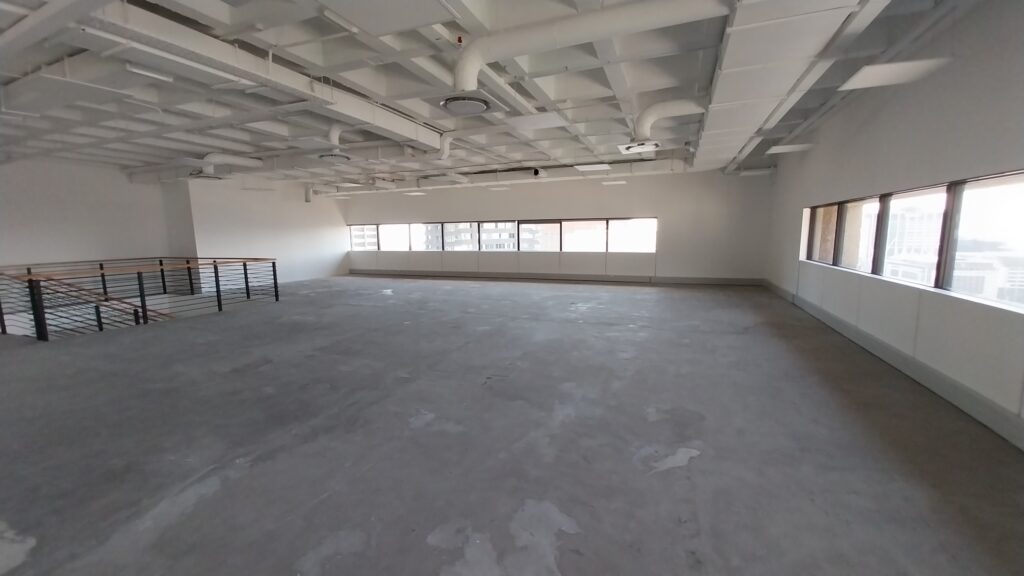
A make-good clause is a section of your commercial lease agreement that requires you, as the tenant, to return the leased premises to a specified condition before you hand back the keys. In most South African commercial leases, this means restoring the space to the condition it was in when you first moved in before any alterations, branding, partitioning, or fit-out work you carried out during your occupancy. The clause exists to protect the landlord’s asset. A commercial property is easier to re-let, value, and maintain when it returns to a neutral, standardised state between tenants, rather than carrying the fit-out choices of whoever occupied it last.
Make-good obligations aren’t unique to South Africa, they’re standard practice in commercial leasing globally, but the specific wording, scope, and enforcement can vary significantly from lease to lease. This is why reading your own agreement carefully matters more than relying on general assumptions about what “make-good” means.
Make-Good vs. Office Reinstatement: What's the Difference?
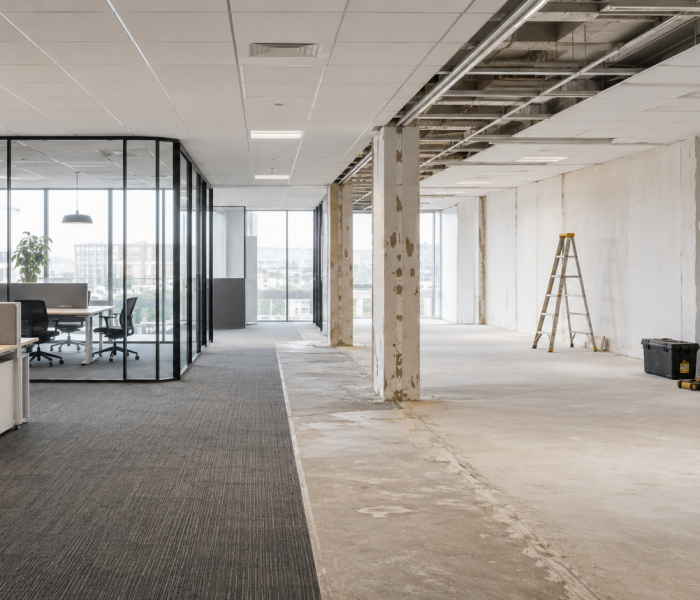
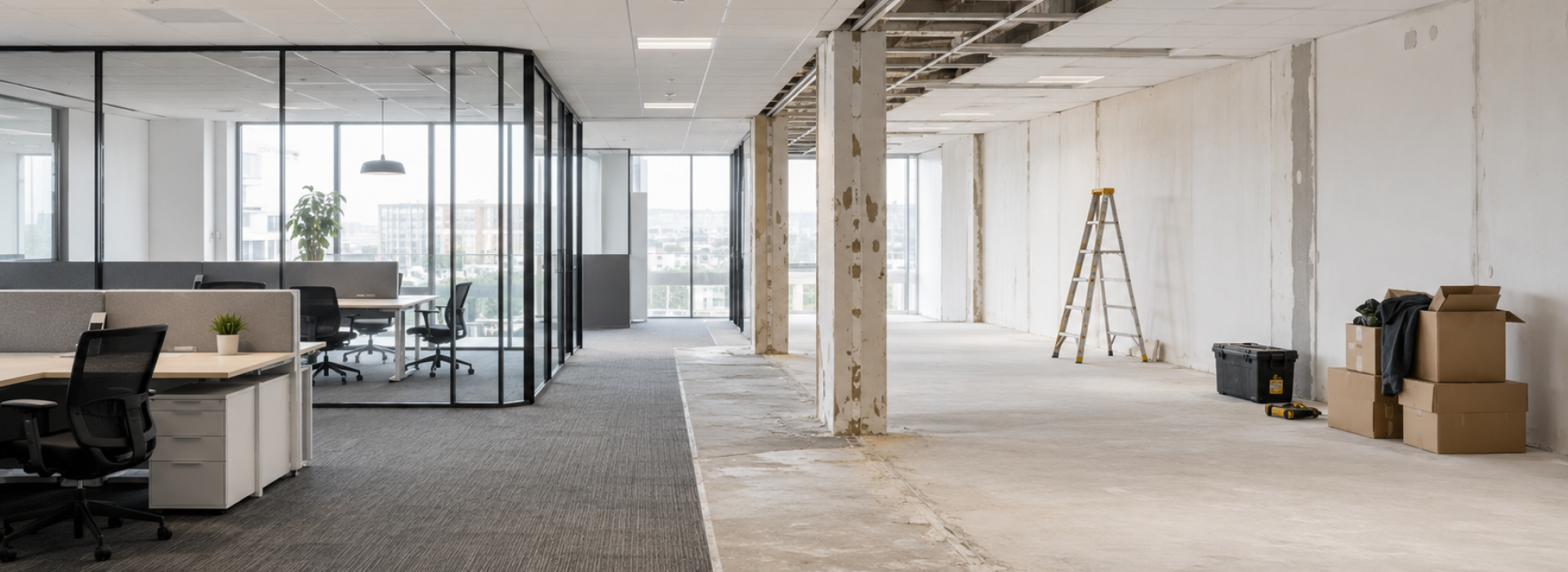
In practice, make-good and office reinstatement are used almost interchangeably in the South African commercial property market, and you’ll see both terms in leases, on contractor websites, and in conversations with landlords and brokers. If there’s a distinction, it’s this: make-good is the legal term used in the lease itself and it refers to the obligation. Office reinstatement is the more commonly used term for the physical work carried out to meet that obligation like stripping out partitions, restoring flooring, repainting, and returning services to their original state. For the purposes of this guide, and for most practical purposes, you can treat them as the same thing. What matters is understanding what your specific lease requires, not which term it uses to describe it.
What a Make-Good Clause Usually Requires
The exact scope depends entirely on your lease wording, but most make-good obligations in South African commercial office leases cover some combination of the following:
- Structural alterations — removal of partition walls, false ceilings, and any built-in workstation cubicles installed during your tenancy
- Electrical and data systems — restoring wiring, power points, and data cabling to their original layout
- Flooring — removing tenant-installed flooring or coverings and restoring the original floor finish
- Painting and finishes — repainting walls to their original colour, and repairing any marks or damage
- Signage and branding — removing all tenant signage, branded elements, and wall graphics
- Furniture and fit-out removal — clearing desks, cabinets, and any built-in joinery that wasn’t part of the base building
- Making good any damage — repairing anything that occurred during the tenancy beyond normal wear and tear
Some leases are specific and itemised. Others are vague, simply requiring the space to be returned “in good order” or “as originally handed over”, which is where disputes tend to arise, and why a professional assessment against your actual lease wording is worth doing early.
Why Landlords Include Make-Good Clauses in Commercial Leases
From a landlord’s perspective, a make-good clause protects the long-term value and marketability of the building. Every tenant fits out a space differently, different partition layouts, different branding, different cabling routes. Without a make-good obligation, a landlord would inherit a patchwork of previous tenants’ decisions every time a lease ended. Reinstating the space to a neutral condition allows landlords to:
- Re-let the premises faster, without needing to strip it out themselves first
- Present a consistent standard across their building or portfolio
- Avoid absorbing the cost of removing a previous tenant’s alterations
- Accurately value and market the space to new prospective tenants
Understanding this motivation helps explain why landlords are often firm on enforcing make-good clauses, even when a tenant feels the alterations they made were an improvement to the space.
What Happens If You Don't Meet Your Make-Good Obligations
Ignoring or under-delivering on a make-good clause rarely works out in the tenant’s favour. Common consequences include:
- Withheld deposit — landlords are entitled to retain some or all of your deposit to cover the cost of the outstanding work
- Higher costs, billed to you — if the landlord arranges the reinstatement work themselves, they’ll typically use their own contractors at their own rates, which are almost always higher than what you’d have paid managing the work directly
- Delayed lease finalisation — outstanding make-good work can hold up final sign-off, which matters if you need a clean handover for your own accounting or legal purposes
- Disputes and legal costs — disagreements over what “original condition” means, or whether work was completed adequately, can escalate into costly and time-consuming disputes
Most of these outcomes are avoidable simply by planning the make-good process proactively, rather than leaving it until the final weeks of the lease.
When to Start Planning for Make-Good
Make-good work is easy to underestimate. What looks like a straightforward strip-out often involves multiple trades, electrical, flooring, painting, waste removal, all of which need to be sequenced and completed before your handover date.
As a general guide, start planning two to three months before your lease ends. This gives enough time to:
- Review your lease agreement and identify exactly what’s required
- Get a site assessment from a contractor experienced in commercial reinstatement
- Obtain itemised quotes and agree on scope
- Schedule the work around your business’s operational needs
- Complete a final walkthrough and get written sign-off from your landlord before handover
Businesses that leave this until the last few weeks of a lease are the ones most likely to face rushed work, higher costs, or disputes over incomplete reinstatement.
What Influences Make-Good Costs
There’s no fixed price for make-good or office reinstatement work, the cost depends on several factors specific to your space and lease terms:
- The size of the premises and the extent of alterations made during your tenancy
- The complexity of electrical, data, and mechanical systems that need restoring
- Whether flooring needs full replacement or can be restored
- The condition of the space relative to what the lease requires
- Timeline pressure — compressed schedules can increase cost
- Waste removal and disposal requirements
A proper site assessment against your actual lease wording is the only reliable way to scope cost accurately, generic estimates tend to either overstate or understate what’s actually required.
Frequently Asked Questions
Is a make-good clause the same as office reinstatement? Effectively, yes. Make-good refers to the lease obligation; office reinstatement refers to the work carried out to meet it. They’re used interchangeably in the South African commercial property market.
Who pays for make-good work? The tenant is almost always responsible for the cost, as set out in the lease agreement, unless otherwise negotiated with the landlord.
Can make-good obligations be negotiated? Sometimes. Some landlords will agree to waive certain requirements, especially where alterations add value to the space for future tenants — but this needs to be agreed and documented before you carry out any work, not assumed afterward.
What if my lease doesn’t clearly specify make-good requirements? Vague wording is common and is exactly where disputes tend to happen. It’s worth clarifying expectations with your landlord in writing before starting any reinstatement work, rather than relying on interpretation alone.
How long does make-good work typically take? This depends on the scope, but most office reinstatement projects take anywhere from a few days for a light-touch space to several weeks for a full structural strip-out. Starting the planning process early is the best way to avoid time pressure.
Get Expert Help With Your Make-Good Obligations
Understanding your make-good clause is the first step, meeting it properly is the part that protects your deposit, your timeline, and your relationship with your landlord.
Get in touch to discuss your reinstatement project and get up to three independent quotes