Cape Interiors
Office Interior Design
Home > Services > Space Planning
At Cape Interiors we source independent quotes from commercial space planners in our network who design layouts around how your business actually operates. You receive up to 3 proposals, compare them, and choose the direction that works.
Space planning is how you turn a floor plate into a functioning workspace. Done well, it reduces friction, improves workflow, and gives every square metre a purpose. Done badly, it creates a space that looks acceptable but frustrates everyone who works in it.
We connect you with commercial space planners from our network who prepare independent layouts based on your brief. You see their approach, compare it to the alternatives, and choose the one that fits how your team actually works.
Effective space planning is essential for creating a workspace that supports the needs of employees, enhances productivity, and reflects your organization’s brand identity and values. We’re passionate about helping our clients unlock the full potential of their workspace through strategic space planning solutions.
We help you make the most of your space. Whether you’re moving into a new office or improving your current layout, we design practical floor plans that support your operations. We focus on how people work and what your business needs. From desk placement to meeting room configuration, we align every decision with your goals.
A commercial space planner works from accurate floor plan drawings and a detailed brief from you. The output is a scaled layout that covers:
Team positioning and adjacencies — which teams sit near each other, which need separation, and how the physical layout supports the way different parts of the business interact day to day.
Room types and sizes — the number and capacity of meeting rooms, focus rooms, phone booths, and enclosed offices your headcount and working style require. Room sizes that look reasonable on paper often feel wrong in three dimensions. A space planner works to the right dimensions from the start.
Reception and client areas — how visitors enter, where they wait, and what they see on the way to a meeting room. The client journey through your space matters to how your business is perceived.
Circulation — how people move through the office. A floor plate with poor circulation creates pinch points, interrupts concentration, and makes the space feel smaller than it is.
Natural light distribution — where open areas sit to benefit from light and where enclosed rooms are positioned so they do not block it. This single decision affects how the entire floor feels once occupied.
Storage and services — where filing, storage, server rooms, and utility areas sit so they function efficiently without consuming prime floor space.
Growth capacity — whether the layout can accommodate additional headcount, a new team, or a change in working pattern without a structural renovation.
You are moving into a new office. A white box or grey box space needs to be configured from scratch. A space plan before fit-out ensures the construction scope is correct from day one. Changes during a build cost significantly more than changes on a drawing.
Your current layout is not working. Teams are crowded. Meeting rooms are always booked because there are not enough of them, or always empty because they are the wrong size. There is nowhere quiet to concentrate. Staff are working from home more than the office warrants. These are layout problems, not culture problems. A space plan diagnoses them.
You are about to spend money on a renovation. A renovation without a current space plan risks spending the budget in the wrong places. A space plan first tells you exactly what needs to change and what does not.
You are considering a new office and want to know if it fits. A test-fit — a basic space plan done against a specific floor plate — tells you whether a space can physically accommodate your requirements before you sign a lease. It is far cheaper than committing to a lease and discovering the layout does not work.
A well-designed office with a poor layout frustrates the people who use it. A simply finished office with a well-considered layout functions well from day one and continues to function well as the business changes.
Most offices that feel cramped are not actually too small. The floor plate is adequate but the layout wastes space on oversized rooms, poor circulation, or enclosed areas in positions where open space would serve the team better. A space planner finds that space.
Most offices where staff avoid meeting rooms have meeting rooms that are the wrong size, in the wrong position, or acoustically inadequate. A space planner specifies the right room types for the way the business actually meets.
Most offices where natural light does not reach the work areas have enclosed rooms built across the window line. A space planner positions those rooms where they belong — away from the glazing — so light reaches the people who sit in the space all day.
These are not design preferences. They are operational decisions that affect productivity, staff satisfaction, and the daily experience of everyone who works in the space.
Step 1: Initial Consultation
The space planning process begins with an initial consultation between our team and key stakeholders from your organization. During this meeting, we’ll discuss your goals, requirements, and vision for the new office space. We’ll also gather information about your workflow processes, employee demographics, and any specific spatial challenges or constraints that need to be addressed.
Step 2: Needs Assessment
Next, we’ll conduct a comprehensive needs assessment to understand the specific spatial requirements of your organization. This may include determining the number of employees, the types of workspaces needed (e.g., individual workstations, meeting rooms, collaboration areas), and any special considerations such as accessibility requirements or technology infrastructure.
Step 3: Space Analysis
With the needs assessment in hand, our team will analyze the available space to determine how it can be best utilized to meet your requirements. This involves evaluating factors such as the size and layout of the space, natural light exposure, existing architectural features, and any potential obstacles or limitations that may impact the design.
Step 4: Concept Development
Based on our analysis, we’ll develop preliminary concepts and layouts for the new office space. These concepts will take into account factors such as workflow efficiency, traffic flow, departmental adjacencies, and opportunities for collaboration. We’ll work closely with you to refine these concepts until we arrive at a design that meets your needs and aligns with your vision.
Step 5: Design Refinement
Once the initial concepts are approved, we’ll move into the design refinement phase. During this stage, we’ll fine-tune the layout and incorporate additional design elements such as furniture, finishes, and branding elements. We’ll also consider sustainability principles and ergonomic best practices to create a workspace that promotes employee health and well-being.
Step 6: Documentation and Implementation
With the design finalized, we’ll prepare detailed documentation, including floor plans, elevations, and specifications, to guide the implementation of the project. We’ll work closely with contractors and vendors to ensure that the design is executed according to plan, and we’ll provide ongoing support and guidance throughout the construction and installation process.
Step 7: Post-Occupancy Evaluation
After the new office space is occupied, we’ll conduct a post-occupancy evaluation to assess how well the design meets the needs of your organization and identify any areas for improvement. We’ll gather feedback from employees and stakeholders and make any necessary adjustments to ensure that the space continues to support your goals and objectives.
Q: What is office space planning? Space planning is the process of analysing a floor plate and designing a functional layout before any building work begins. It determines where workstations, meeting rooms, circulation routes, storage, and amenity areas are positioned, based on your headcount, team structure, and how your business actually operates. It is the thinking that should happen before any renovation or fit-out spend.
Q: Is space planning the same as interior design? No, though the two are often done together. Space planning is about function — how the space is divided and used. Interior design is about aesthetics — finishes, materials, colour, lighting, and brand expression. A space plan can exist without a full interior design brief, but an interior design project without a sound space plan underneath it tends to produce spaces that look good but frustrate the people working in them.
Q: Do I need a space plan before I renovate? In most cases, yes. A space plan defines where walls go, where services need to be extended or relocated, and what the finished layout will look like. Making these decisions before construction starts is significantly cheaper than changing them mid-build. Contractors price against a plan — without one, quotes are approximate at best and subject to variation once work begins.
Q: How much does office space planning cost in Cape Town? Space planning fees depend on the size of the space and the level of detail required. Preliminary concept layouts are typically less expensive than fully documented plans with specifications for contractors. For most commercial projects in Cape Town, space planning is either quoted as a standalone professional fee or included as part of a broader fit-out or renovation quote. Through Cape Interiors, you receive independent quotes that clearly show what is and is not included — so you can compare on an equal footing.
Q: How much space do I need per person? The standard benchmark for conventional office layouts in South Africa is 10 to 12 square metres per person, inclusive of circulation, meeting rooms, and amenities. Activity-based working environments — where staff share desks and move between different work settings — typically run lower, at 7 to 9 square metres per person. Neither figure is absolute. The right answer depends on your occupancy patterns, meeting room requirements, storage needs, and how much quiet work versus collaborative work your team does.
Q: What information do I need to provide for a space plan? At minimum: the size of the space in square metres, the number of people who will work in it, a basic description of the teams or departments involved, any fixed requirements (reception, meeting rooms, breakout areas, storage), and your timeline. You do not need architectural drawings or technical documents to get started — our contractors will conduct their own site measurements. The clearer your brief on how your team works, the more useful the resulting layouts will be.
Q: Can space planning help if my team has shifted to hybrid working? Yes — and this is one of the most common briefs we receive at the moment. Hybrid working fundamentally changes the space requirement. If 40 percent of your team is in the office on any given day, a traditional assigned-desk layout wastes lease cost and creates a space that feels empty. A space planner will assess your actual occupancy patterns and design a layout that works for your real usage, not your headcount on paper.
Q: How long does the space planning process take? A preliminary concept layout for a straightforward brief can be turned around in one to two weeks. A fully documented space plan with detailed specifications typically takes three to four weeks. Larger or more complex spaces take longer. The planning phase is almost always faster than the build phase — time invested here consistently reduces time and cost during construction.
Q: Do I need council approval for a space plan? A space plan itself does not require council approval. However, if the layout resulting from the space plan involves structural changes, alterations to fire protection systems, or significant plumbing or electrical modifications, those construction elements will require the relevant approvals. Your contractor or architect will advise on what approvals apply once the plan is finalised and the scope of work is confirmed.
Q: Can Cape Interiors help with space planning for a new office I have not moved into yet? Yes — this is the ideal time to commission a space plan. Working with a blank or lightly fitted space gives the planner the most flexibility, and decisions made before occupation are far less disruptive and less expensive than changes made after the business has moved in. If you are taking a new lease, request a space plan as part of your pre-occupation process.
A space plan directly controls how much your office renovation costs. The number of partitions, the position of plumbing points, the extent of electrical modifications, and the run lengths of data cabling all flow from the layout. A layout that is not thought through properly produces a construction scope that is more complex and more expensive than it needs to be. Learn more about our fit-out Services in Cape Town. Investing in a proper space plan before briefing contractors produces more accurate quotes because contractors are pricing a defined scope rather than making assumptions. It also produces more comparable quotes — when every contractor is pricing the same layout, the differences between quotes reflect genuine differences in cost and approach, not different interpretations of an unclear brief.
Space planning does not have to be a standalone appointment. Many fit-out and renovation contractors in our network include space planning capability in their service, either in-house or through a design partner. When you submit your brief through Cape Interiors, you can request that a space plan be included as part of each contractor’s proposal. Read our article on Hidden costs in your Office Fit-out.
For larger or more complex projects, multiple floors, high headcounts, or spaces that require landlord or council submission, an independent space planner appointed before the contractor adds a layer of rigour that protects your interests throughout the project. Tell us what your project involves and we will advise on the most practical approach.
The more context you give a space planner, the more relevant their response will be. You do not need all of this before you contact us, we will help you structure it, but useful information includes: Your current headcount and expected growth over the lease term. How your teams are structured and which ones interact regularly. The room types you need and roughly how many people each room should seat. Any fixed constraints — existing furniture you are keeping, landlord restrictions, structural elements that cannot move. Your timeline and whether the project is tied to a lease start date. Your budget range for the fit-out overall.
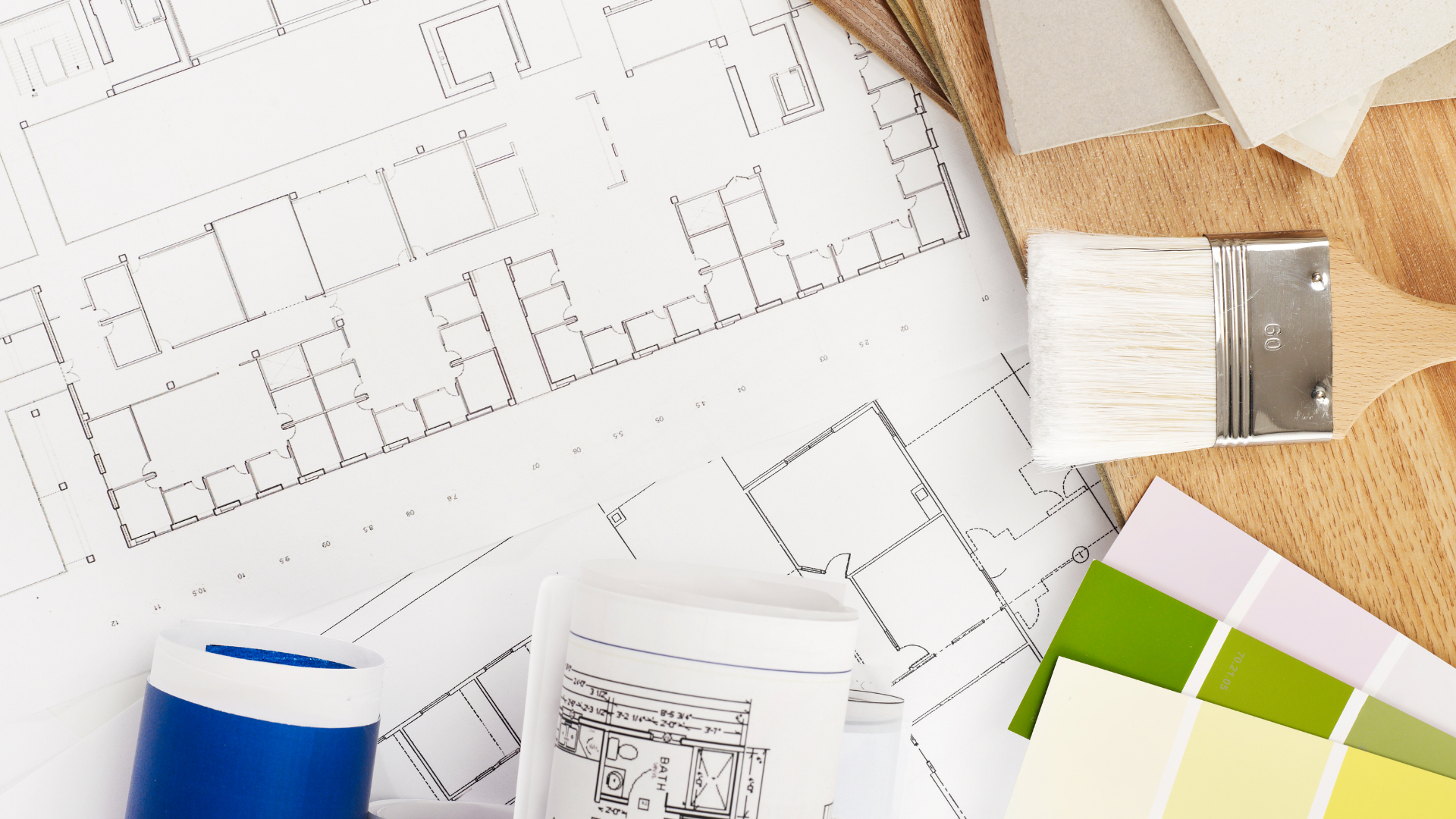
A floor plan of the space helps significantly. If you have one, share it. If you do not, a space planner can work from a site visit.
We leverage our vast network of skilled contractors and office interior designers to offer you multiple competitive and independent quotes for your projects.