
Cape Interiors
Office Interior Design
Home > Services > Interior Design
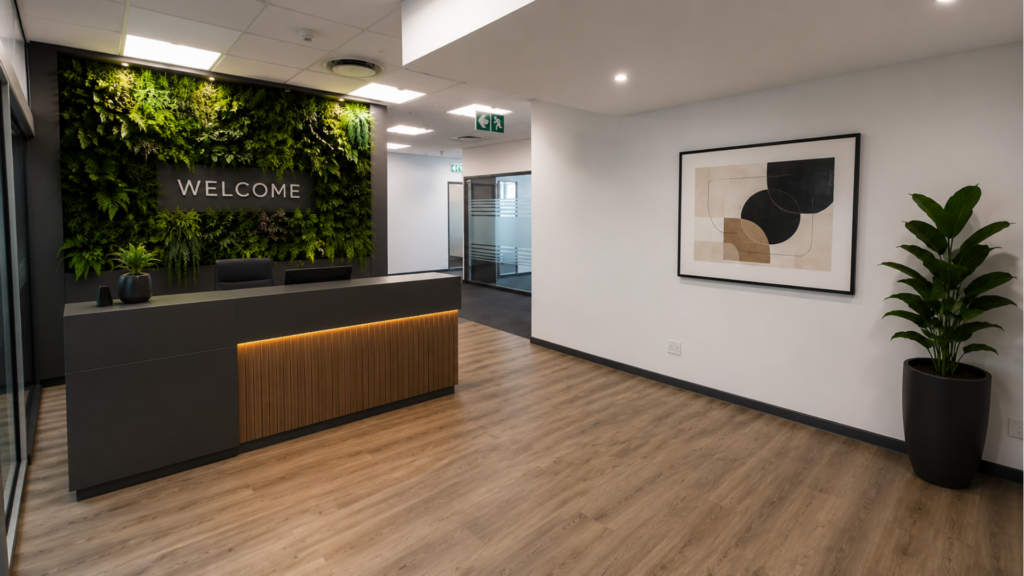
Cape Interiors coordinates independent quotes from commercial interior designers across Cape Town. You receive up to three proposals from designers who work exclusively in commercial environments, you choose the direction that fits your brief and your budget.
Commercial interior design operates under constraints residential work doesn’t. Building code compliance, landlord approval processes, acoustic performance requirements, lease-end reinstatement implications, and the need to specify finishes that hold up under daily commercial use, these are not decorating decisions. The designers in our network work in commercial environments full-time. That distinction matters when the brief goes beyond paint colours.
Most businesses approach interior design by contacting a single designer, receiving one proposal, and making a decision with nothing to compare it against. We work differently.
When you brief Cape Interiors, we source up to three independent proposals from commercial interior designers in our network, designers who work specifically in office and commercial environments, not generalists who move between residential and commercial projects.
Q: What is commercial interior design and how does it differ from residential? Commercial interior design focuses on workspaces, retail environments, and business premises rather than homes. The priorities are different — commercial projects must meet building code requirements, accommodate larger numbers of people, support specific workflow patterns, and hold up to daily commercial use. Materials are specified for durability rather than comfort alone, and the design must serve the business operationally, not just aesthetically. A residential designer can make a space look good. A commercial designer makes it function correctly for the people who work in it.
Q: Does Cape Interiors provide interior design directly, or source quotes? Cape Interiors coordinates independent quotes from commercial interior designers in our network — the same model as our other services. You receive up to three independent proposals from designers who work specifically in commercial environments. You compare their approach, their fees, and their track record, and choose the one that fits your brief. We remain available throughout the process to help you evaluate what you are seeing.
Q: When in the project process should I engage an interior designer? As early as possible — ideally before any construction or fit-out work begins. Interior design decisions influence where partitions go, what finishes are specified, how lighting is positioned, and what furniture is selected. Making these decisions after the build has started limits your options and increases cost. If you are also commissioning a space plan, the interior designer should work alongside or immediately after the space planner so that the aesthetic brief informs the layout decisions from the outset.
Q: What does a commercial interior design brief typically include? A thorough brief covers: your headcount and how different teams use the space, your brand guidelines and any existing brand assets, the finishes and aesthetic direction you are working toward, your budget range, your timeline, and any non-negotiables — whether that is a particular material, a specific furniture specification, or a requirement to use existing furniture. The more specific your brief, the more comparable the proposals you receive will be. Designers working from vague briefs produce vague proposals that are difficult to evaluate.
Q: How much does commercial interior design cost in Cape Town? Interior design fees are typically structured as either a flat project fee, a percentage of the total project cost, or an hourly rate depending on the scope and the designer’s model. For commercial projects in Cape Town, flat fees for a mid-sized office design brief typically range from R25,000 to R80,000 depending on complexity, level of documentation required, and whether the designer is also managing contractor coordination. Getting three independent proposals through Cape Interiors gives you real market context rather than a single designer’s pricing structure.
Q: What is the difference between interior design and interior decorating? Interior design is a professional discipline that involves space planning, technical drawings, specification of materials and finishes, coordination with contractors and suppliers, and compliance with building codes. Interior decorating focuses on the surface layer — colour, soft furnishings, accessories, and styling. For a commercial office project, you need interior design, not decorating. The decisions being made affect the build, not just the appearance.
Q: How do I know if a designer’s aesthetic is right for my brand? Ask to see a portfolio of commercial projects, not residential work. Look specifically for projects in a similar industry or with a similar brief to yours. A good commercial designer will be able to work within your brand guidelines rather than imposing their own aesthetic preferences. In your brief, include your brand colour palette, any existing brand guidelines, and examples — even from other industries — of spaces that reflect the direction you want. Designers who ask detailed questions about your brand before presenting concepts are generally more reliable than those who lead with mood boards.
Q: Can interior design be phased to manage cost? Yes. A common approach is to commission the full design documentation upfront — so all decisions are made and specified — but implement the build in phases aligned with budget availability or lease milestones. This avoids the more expensive outcome of designing as you go, where decisions made in isolation often create inconsistencies that are costly to correct later. Your designer will advise on what can be phased without compromising the coherence of the final result.
Q: Do I need a separate space planner and interior designer, or can one person do both? Some commercial designers offer both services. Others specialise in one or the other. For most mid-to-large projects, having a space planner establish the functional layout before the interior designer develops the aesthetic brief produces better results — the two disciplines have different priorities and the sequence matters. For smaller projects or straightforward briefs, a designer who handles both can be sufficient. When you brief Cape Interiors, let us know what you need and we will match you with the right people for your scope.
We leverage our vast network of skilled contractors and office interior designers to offer you multiple competitive and independent quotes for your projects.